Welcome to the Minor Works Program
Small ideas. Real action. Done together.
The Minor Works Program helps neighbours turn simple ideas into real things that happen locally. It’s a hands-on, people-led way of building stronger neighbourhoods, starting small and growing from there.
The Minor Works Program is not a service or a delivery model.
It’s a way of setting things up so that people in a neighbourhood can imagine ideas, turn them into action, and keep things going together.
At its simplest, it creates the conditions for small, practical projects to emerge, be led by local people, and connect into wider networks without losing their local ownership.
On a deeper level, it builds Socialannuation locally and creates long-term resilience, wellbeing, and trust in democracy.
Why the Minor Works Program exists
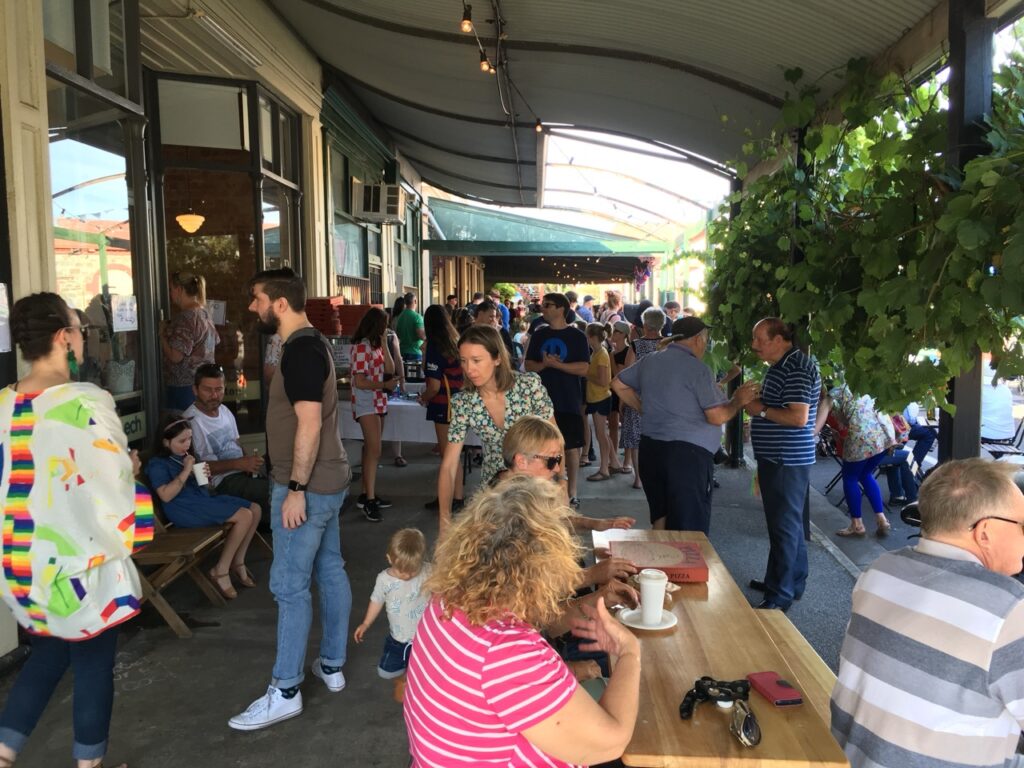
In most neighbourhoods, people care. They notice things that could be better. They’ve got ideas and energy, but often don’t know where to start.
Small, local ideas often fall through the cracks. They’re too small for big systems, but too important to ignore. Many existing systems are built for big organisations, long timelines, and tidy plans. That can make it hard for neighbours just wanting to try something simple together.
So good ideas stall, people lose momentum, and communities miss chances to build connection and confidence locally. The Minor Works Program exists to make that first step easier.
What the program does
The program doesn’t run projects.
It sets up a participatory environment where projects can be imagined, shaped, and delivered by the people who care about them.
It does this by:
- creating simple, accessible pathways from ideas to action
- normalising small-scale, low-risk projects
- making space for shared learning and decision-making
- connecting people into networks of peers and institutions
- fostering inclusion and accessibility every step of the way
Once those conditions are in place, communities take it from there.
What makes this different
The Minor Works Program is built on a simple assumption: people are capable.
Rather than asking communities to fit into existing systems, the program reshapes the system around how people actually organise themselves.
Small projects are not a stepping stone, they are the point. They are where confidence grows, relationships form, and trust is built.
Because the work is locally led, it’s grounded in real knowledge of place. Because it’s shared, it builds collective responsibility rather than dependency.
Institutions don’t sit above this work, they sit alongside it.
How it works in practice
The program functions like scaffolding.
It’s there at the start, visible and supportive. Over time, as confidence and capability grow, it becomes less central.
People are supported to:
- bring ideas forward
- shape them with others
- test them in the real world
- learn what works and what doesn’t
- connect with others doing similar things
What remains after any single project is not just an outcome, but a stronger local network that knows how to do things together.
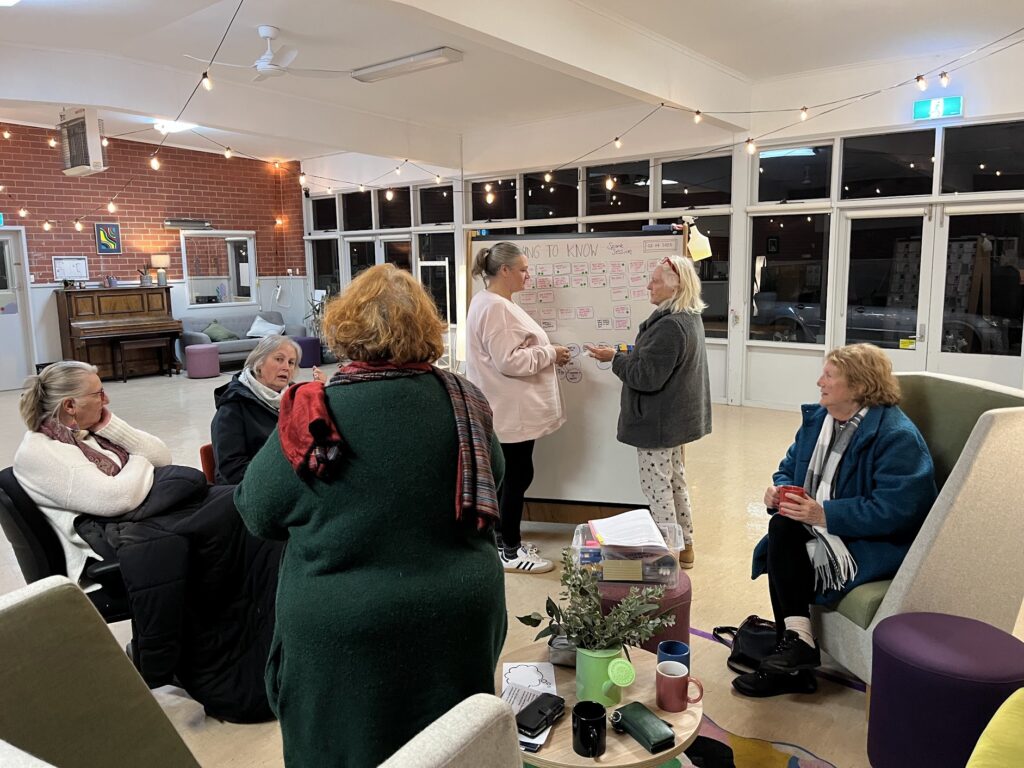
‘Dying to Know’ Spark Session – July 2025
What changes as a result
People don’t just participate, they lead.
Connections deepen through doing, not through attending. Informal support networks emerge naturally. Trust grows between neighbours and between communities and institutions.
Over time, communities become better at:
- organising themselves
- sharing responsibility
- sustaining activity without constant external input
That’s when the work becomes self-perpetuating.
Learn more about the program’s impact
Who does this work for
The Minor Works Program works best where councils, funders, and organisations are willing to shift roles, from delivering solutions to enabling conditions for communities.
In this model:
- relationships do the work
- communities lead
- institutions enable
If you’re exploring this
The Minor Works Program isn’t something that gets “rolled out” to a place.
It’s something a place grows into.
If you’re interested in creating the conditions for participation, shared ownership, and long-term community capability, it starts with a conversation, not a contract.