Project Guides support ideas to move into action while strengthening participation, learning and connection.
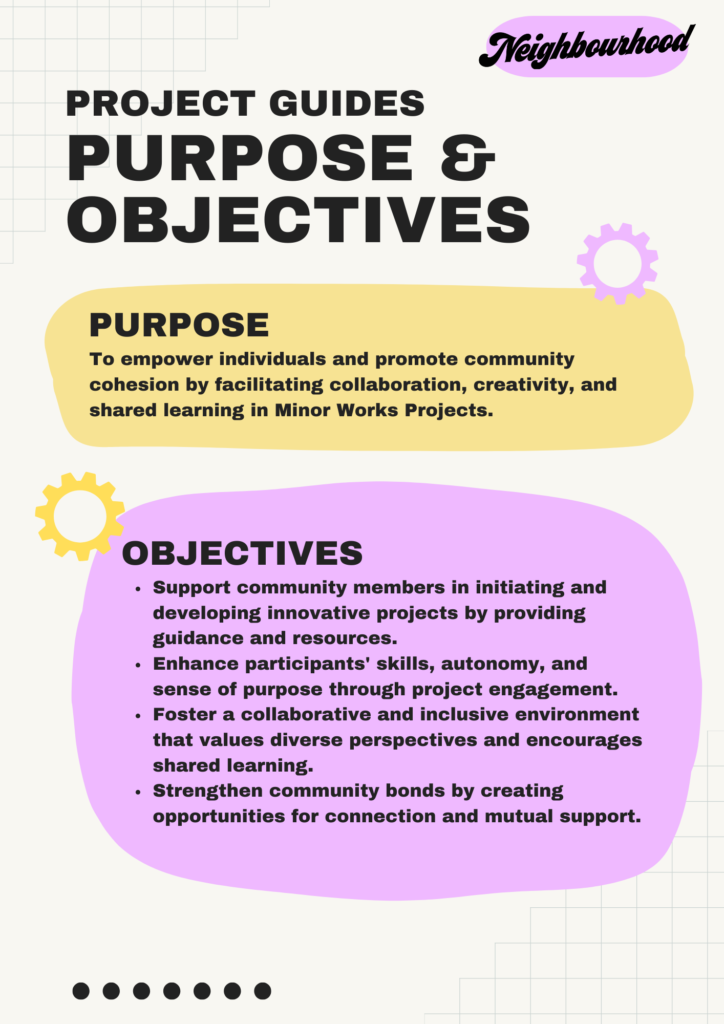
Within the Minor Works Program, Project Guides provide gentle guidance, practical tools and reflective support to help ideas be shaped, shared and carried forward by the people involved. The role is not about running projects or directing outcomes, but about creating the conditions where collaboration, confidence and shared ownership can grow.
Project Guides may be involved at any stage of a project: from early idea-forming through planning, doing and celebration.
The role of a Project Guide
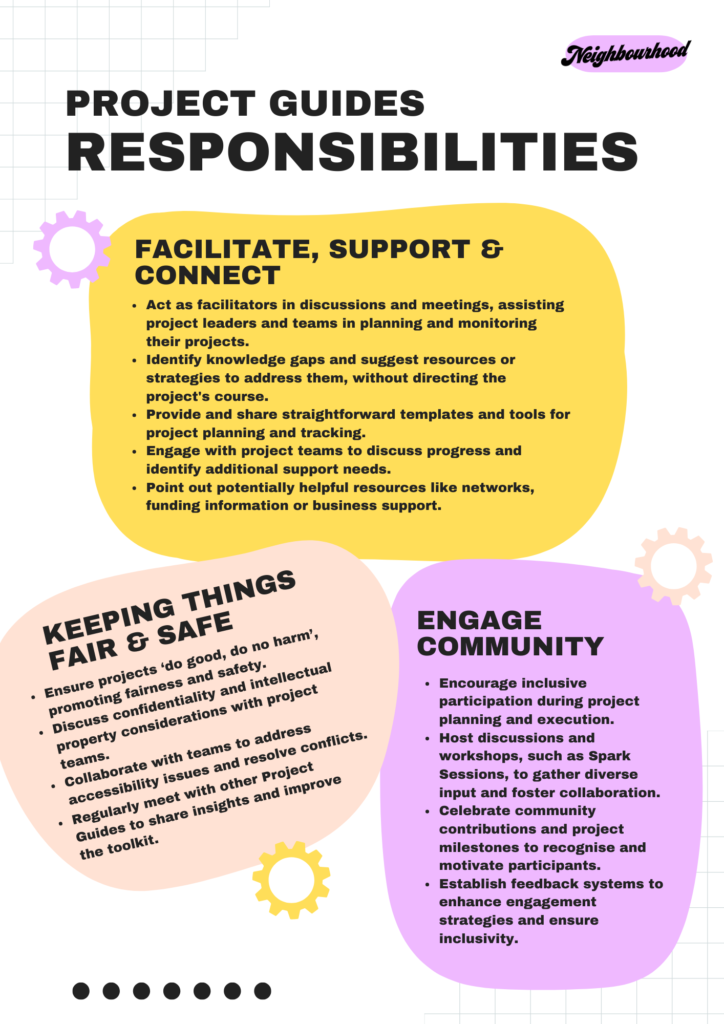
The Project Guide role focuses on enabling people to lead and manage their own projects. This includes:
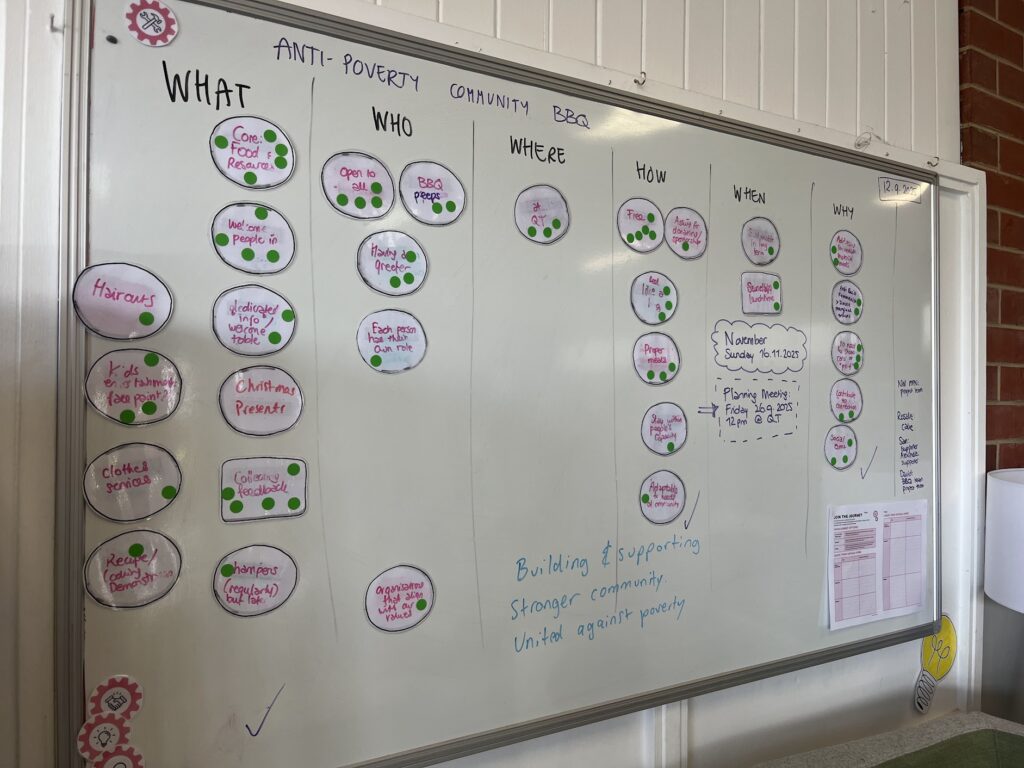
- Supporting reflective conversations that help clarify ideas and next steps
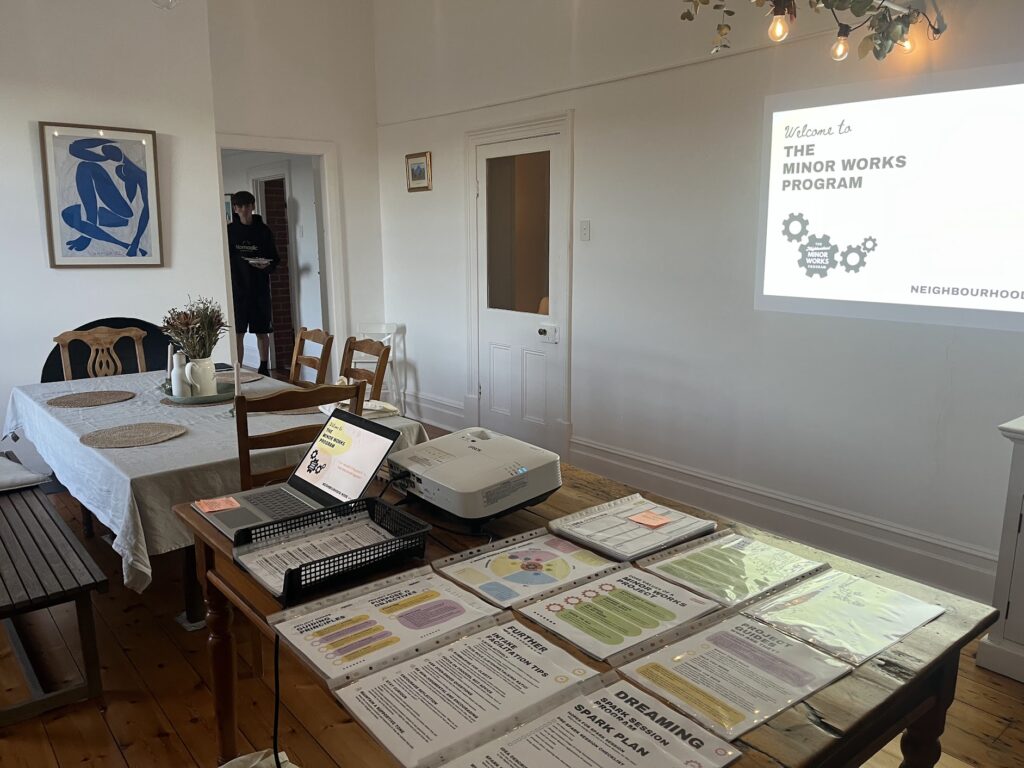
- Sharing simple tools and templates for planning and tracking progress
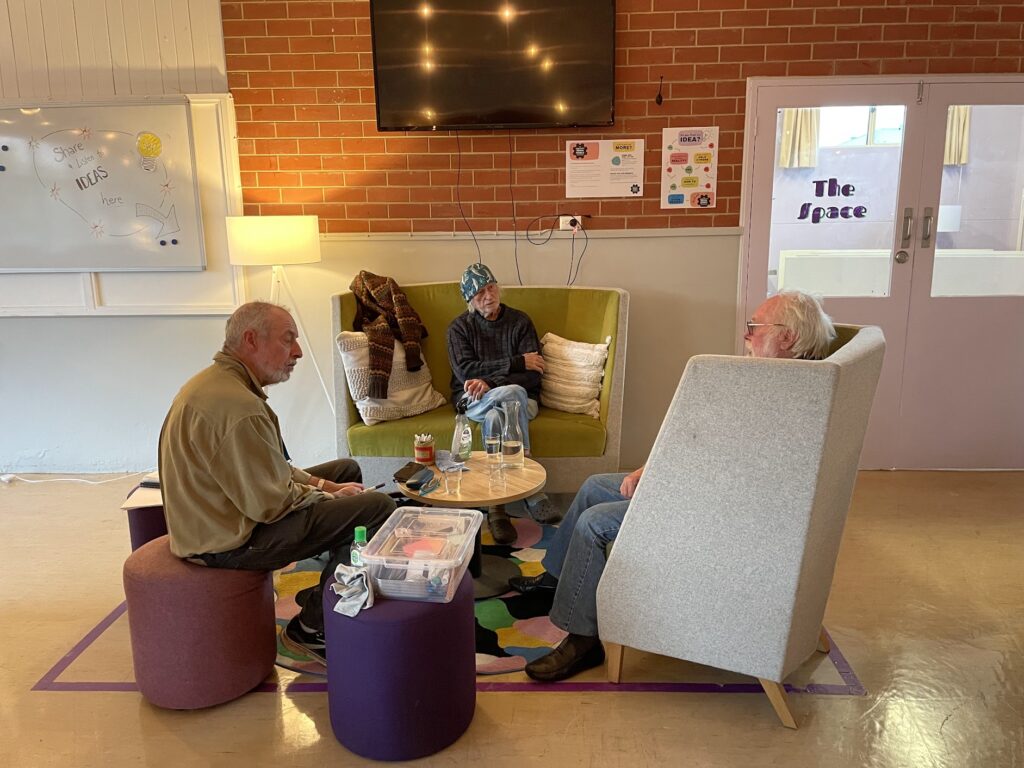
- Helping create inclusive ways of working so more people can participate
- Supporting collaboration and shared problem-solving
- Identifying useful connections, resources or funding information
- Encouraging learning, reflection and celebration throughout the project
The emphasis is on process, participation and shared learning rather than delivery or control.
What the Project Guide role is not
The Project Guide role does not involve managing projects or making decisions on behalf of others. Project Guides do not:
- Decide what a project should look like
- Take ownership of project outcomes
- Set or enforce deadlines
- Judge or compare ideas
- Guarantee funding, success or results
Instead, the role supports autonomy, confidence-building and skill development so projects remain community-led.
Who Project Guides are
Project Guides are community members who value collaboration, learning and participation.
The role is grounded in listening, curiosity and encouragement rather than expertise or authority. Project Guides are not positioned as professionals or decision-makers, but as supportive companions within a shared process of turning ideas into action.
All Project Guides work from the understanding that projects should do good, do no harm, and remain open for others to join, contribute and take ownership over time.
Guiding Principles
Project Guides work from a shared set of principles that shape how support is offered.
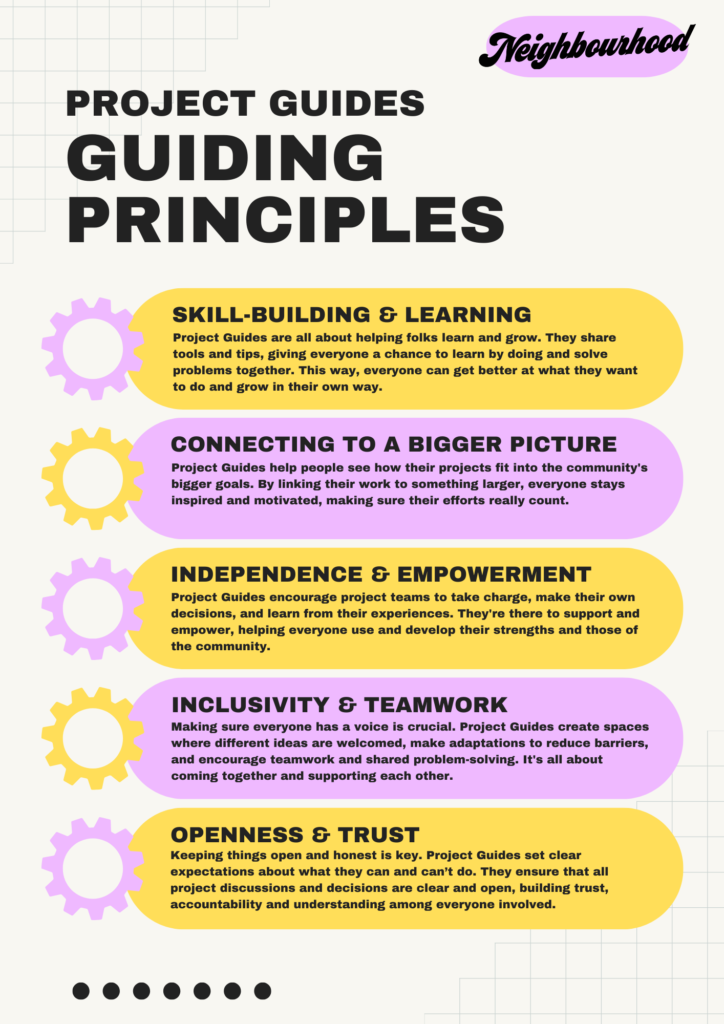
Inclusivity and teamwork
Project Guides support spaces where different perspectives are welcomed, barriers are reduced, and collaboration and shared problem-solving are encouraged.
Learning and skill-building
The role supports learning by doing, reflection and shared experience, enabling people to grow skills, confidence and understanding through participation.
Independence and empowerment
Project Guides encourage project teams to make their own decisions, learn from experience, and recognise their own strengths and expertise.
Connection to the bigger picture
Projects are supported to connect with broader neighbourhood goals, helping maintain motivation and a sense of shared purpose.
Openness and trust
Clear communication, transparency and shared understanding are central to the role, supporting trust and accountability within project teams.
Project Guides within the Minor Works Program
Within the Minor Works Program, Project Guides contribute to strengthening participation and community connection. This may include:
- Facilitating planning conversations, meetings or Spark Sessions
- Supporting inclusive participation throughout project development
- Encouraging reflection, feedback and learning
- Celebrating project milestones and community contributions
- Sharing insights with other Project Guides to strengthen the overall program and document stories of impact
The focus remains on supporting people and processes, rather than directing outcomes. This may happen throughout any or all steps of the Minor Works process. The level and type of support is shaped collaboratively, based on what best supports the project and the people involved.
Project Guides are part of the scaffolding that helps ideas move forward: supporting confidence, connection and shared ownership along the way.